
HRV Training
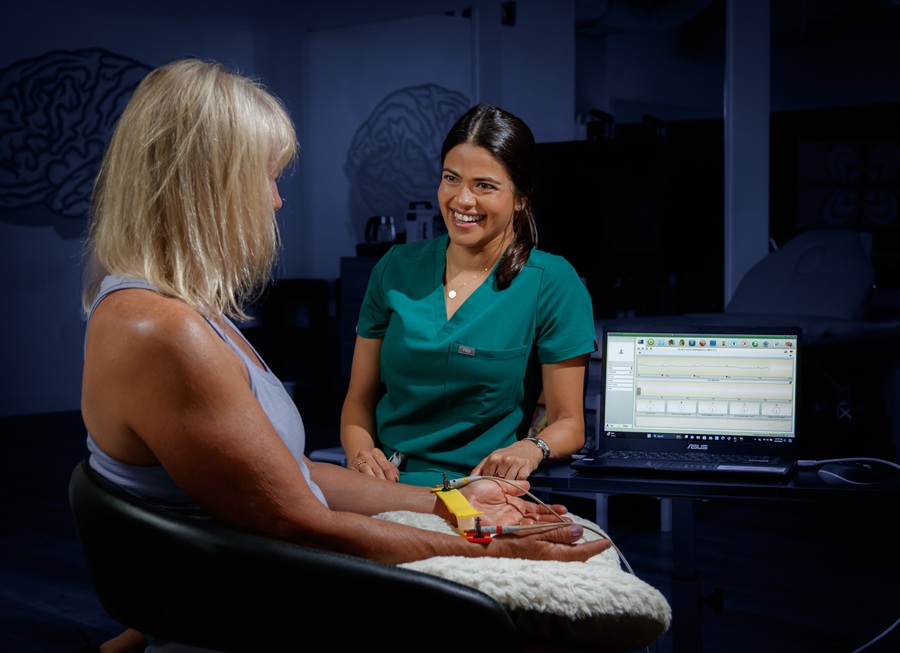
Support the nervous system from the body up
Heart rate variability, or HRV, reflects how flexibly the nervous system responds to stress and recovery demands. HRV training uses breath, pacing, and biofeedback-style coaching to help people build steadier regulation and improve their ability to shift out of survival mode.
This can be especially valuable when symptoms are strongly physical: tight chest, shallow breathing, racing heart, poor recovery after stress, and difficulty switching off even when the day is finished.
A practical option for people who feel stress more in the body than in words.
Useful alongside therapy, neurofeedback, or broader recovery work.
HRV training is often one of the most immediately understandable parts of treatment because patients can feel the link between breathing, pacing, and regulation in real time. That makes it a powerful bridge between insight and action.
HRV gives a picture of how adaptable the nervous system is under pressure. Lower flexibility can be associated with chronic stress, burnout, sleep disruption, and difficulty recovering after emotional or cognitive strain.
-
We look for patterns, not perfection.
-
The aim is better flexibility and recovery, not simply a higher number.
Sessions focus on paced breathing, regulation coaching, and practical strategies that help the body learn a calmer rhythm. We then help you apply those skills in work, family, and performance settings.
-
Simple techniques are practised until they become usable in real life.
-
The emphasis is on transfer into everyday routines.
HRV training can be helpful for anxiety, burnout, sleep problems, panic-like symptoms, and the physical side of chronic overload. It is often chosen by people who want something measurable and practical.
-
Particularly helpful when stress shows up as tension, speed, or exhaustion.
-
Can support emotional regulation as well as physical calm.
One of the strengths of HRV work is how portable it is. The techniques can be used before meetings, before sleep, during periods of overwhelm, or as part of a daily recovery routine that helps prevent escalation.
-
Skills are designed to be useful between sessions.
-
Progress often shows up in resilience, steadiness, and recovery speed.
Small physiological shifts can create meaningful relief
When the body starts to feel safer, concentration, sleep, and emotional regulation often become more available. HRV training is a practical way to build that foundation step by step.
Supports calm, pacing, and resilience in everyday life.
A strong option for patients who value practical tools and measurable progress.